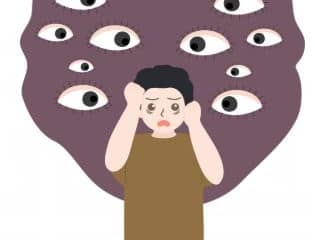
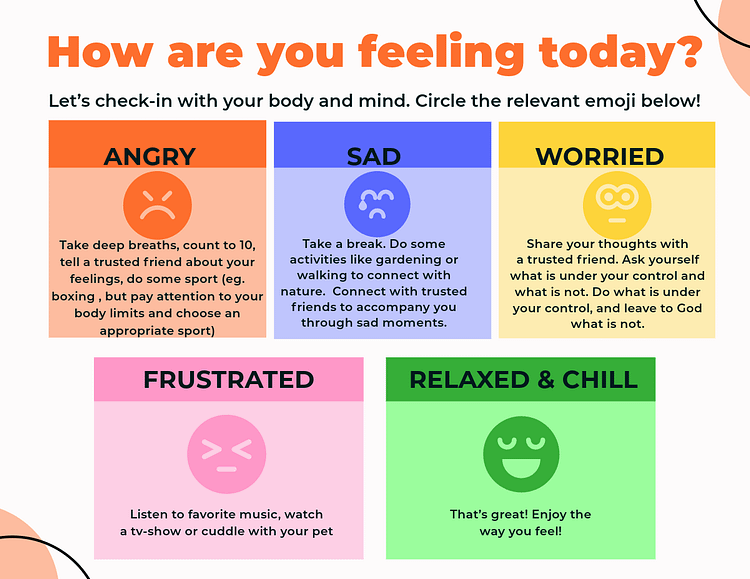

Emotional awareness – meaning recognizing with clarity emotion types and nuances is one of the components of the emotional regulation (how can one regulate its emotional state if not aware of what one feels?)

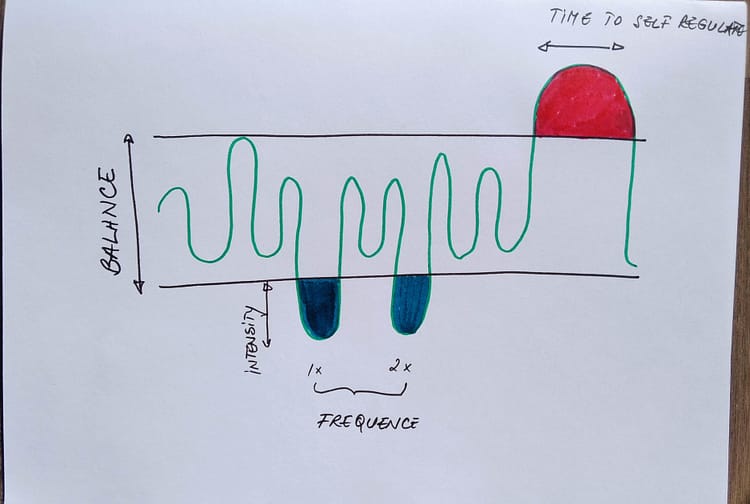
All of us have an emotional interval, with ups and downs, which allow us to be functional in our day-to-day tasks. There are times where the upper or lower limit of our emotional balance are exceeded (and there are times of grief for the loss of a loved one, times of disappointment with closed ones, times of anger for an injustice, anxiety for an exam, interview or change, a sense of “there is something, but I don’t know what” after a certain circumstance, interaction, stress with all nuances). The frequence of these emotional responses, the time to regulate to the usual balance, but also the intensity of emotional responses can be felt as very uncomfortable some times.

A good tool to find soothing in emotional distress is the Emotion Journal. This is a very simple instrument to name in writing all the nuances of the mixed emotions we felt in certain circumstances. There is an immediate effect of peace, after naming all of them. It is as if they were just waiting to be seen, recognized, have their importance recognized in our life, their message recognized for us to sooth, do, act, reflect, change, or whatever is needed to live a more fulfilled life.

Coming back to the question how to recognize our own emotions, if we do not have this habit?

A good tool is Brene Brown’s book The atlas of the heart – it describes the situations and possible associations with several emotions.

Another good tool is our own body. Nummenma et al. (2013) have concluded a study to map emotions to bodily sensation (using words, short movies, facial expressions) and the stunning discovery is that across cultures, people feel emotions in the same way. Article can be found here: https://www.pnas.org/doi/full/10.1073/pnas.1321664111

Nummenma et al. (2013)

Naming emotions

Searching for the best emotion wheel to be used (in Romanian or English), I came across Abby Vanmuijen’s wheel to be found here (I really like this one) :

https://www.avanmuijen.com/watercolor-emotion-wheel

One Romanian version of the wheel of emotions to be found here : https://www.paginadepsihologie.ro/emotiile-si-viata-ce-este-necesar-sa-stie-parintii-despre-gestionarea-emotiilor/roata-emotiilor-foto/

DIY- Do It Yourself

So next time you feel your emotional up or down has been exceeded (it is repeated, uncomfortable, or lasts for longer that it should, and you know better your own emotional experience), try this exercise:

I feel ………………”  (you have resources above) till peace/ a sense of good state is restored.

en_USEN